



IAMMETER: Lightweight Reactive Power & PF Analyzer

Many users first search for kVAR, kVARh, or power factor (PF) because they see these terms in an electricity bill, an inverter setting, a factory energy report, or a power quality discussion.
After understanding what these terms mean, the next practical question is usually:
How can I monitor reactive power and power factor in my own system over time?
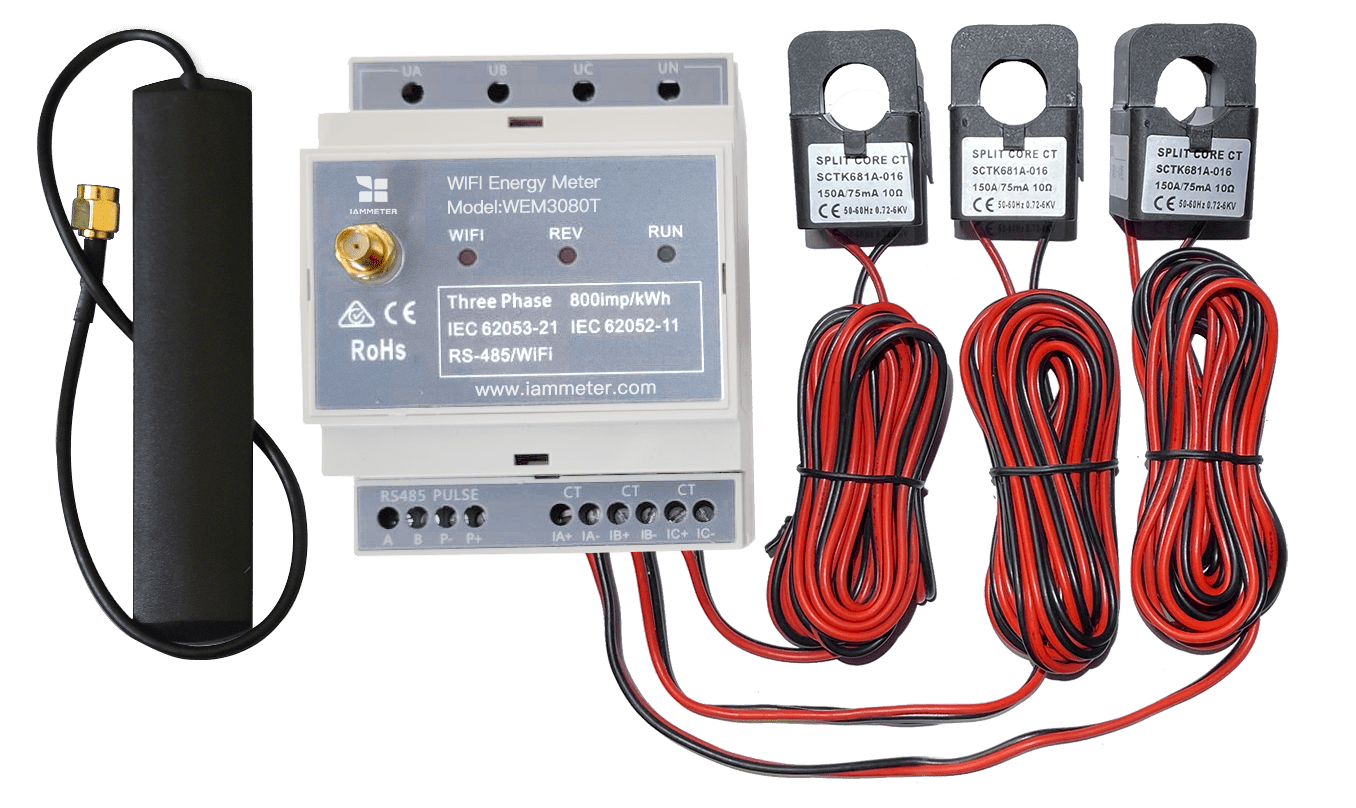
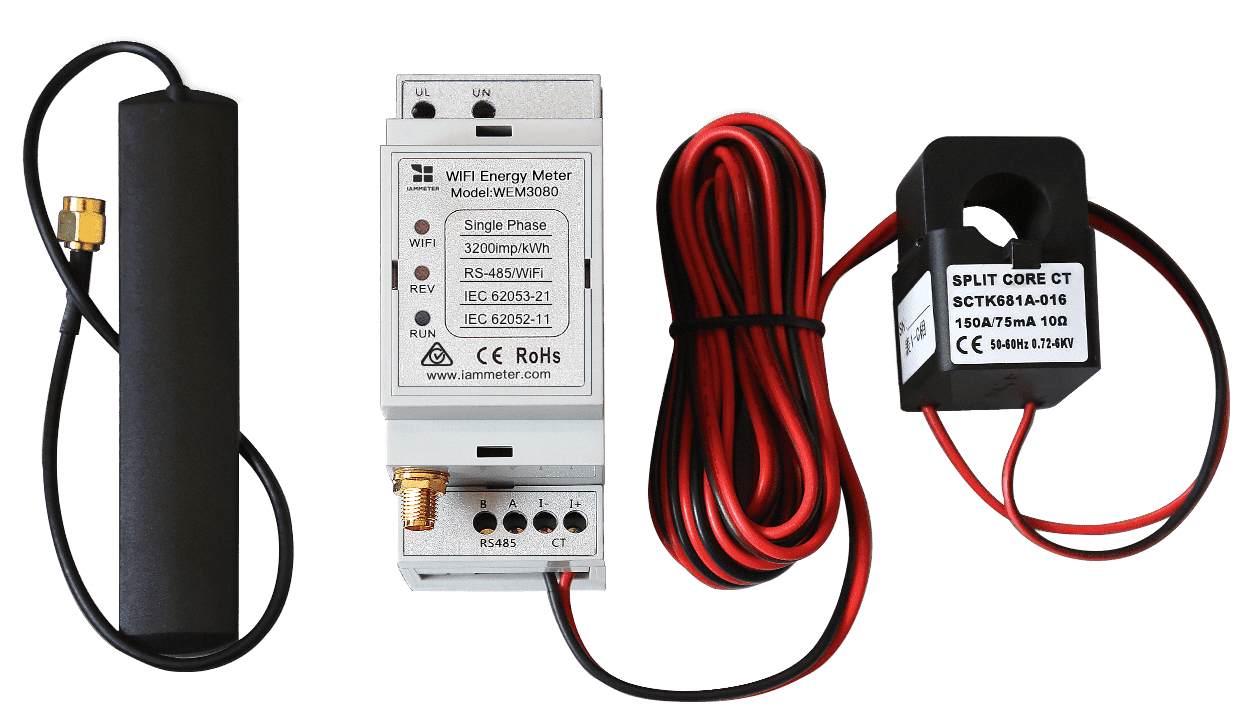
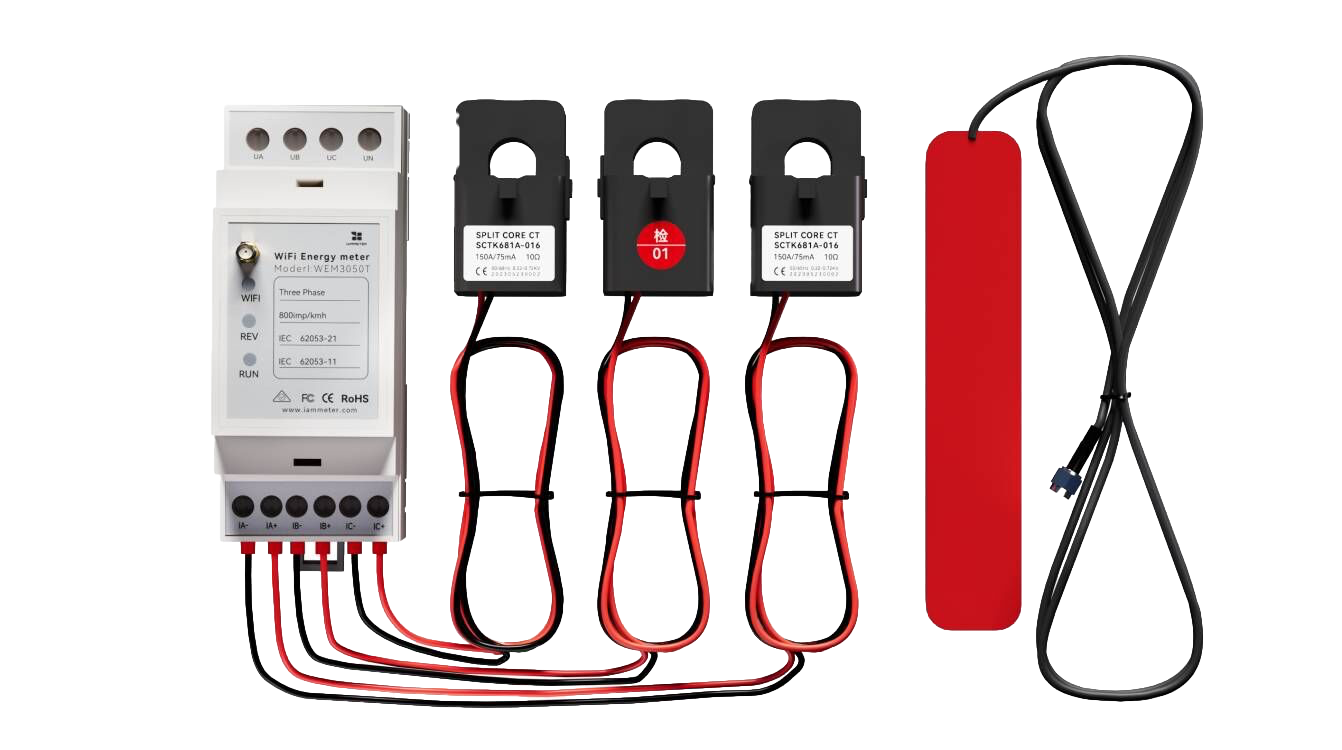
IAMMETER meters can help users record reactive power (Q), reactive energy (kVARh), and power factor (PF) continuously. This makes IAMMETER useful as a lightweight reactive power and PF analyzer for commercial buildings, small factories, solar PV systems, and EMS/BMS integration projects.
It is not a full professional power quality analyzer for harmonic or transient analysis. Instead, it focuses on the metrics many users need every day: kW, kWh, kVAR, kVARh, and PF trends.
1. When Is Reactive Power Monitoring Useful?
Reactive power monitoring becomes useful when a user does not just want to know the instant PF value, but wants to answer operational questions such as:
- Is low power factor happening during working hours?
- Is kVARh significant enough to pay attention to?
- Does a motor, compressor, pump, HVAC system, or production line cause PF to drop?
- Did a capacitor bank, SVG, APF, or other correction measure actually improve PF?
- Can PF and kVARh data be sent to an EMS, BMS, SCADA, or private dashboard?
IAMMETER is a good fit when the goal is long-term online monitoring, not one-time laboratory measurement.
2. Case Show: Worried About Reactive Power Charges?
Some commercial and industrial users may see terms such as kVARh, reactive energy, or power factor penalty on their electricity bill. In this case, the first step is not buying a correction device immediately. The first step is to collect data.
With IAMMETER, users can monitor:
- Power factor trend by hour, day, or month
- Positive and negative reactive energy accumulation
- Active energy consumption and reactive energy side by side
- Whether low PF is occasional or persistent
This helps users understand whether reactive power is a real operational issue, when it happens, and whether it is related to specific equipment or time periods.
Recommended next step:
3. Case Show: Find When Power Factor Drops
A single PF value is often not enough. In many sites, PF changes during the day:
- Motors start and stop
- Compressors run in cycles
- HVAC loads vary with temperature
- Production lines operate only during working hours
- Solar inverters or compensation equipment change operating mode
IAMMETER can record PF, kW, and kVAR continuously, helping users find when PF drops and whether the event is repeated daily.
For example, a workshop may have acceptable PF at night but poor PF during production hours. In this case, the key information is not just "PF is low", but which time period and load behavior caused it.
This kind of trend data is useful before discussing correction measures with an electrician, facility manager, or energy consultant.
4. Case Show: Verify Power Factor Correction Results
IAMMETER does not correct power factor directly. It is a monitoring tool.
However, it can help users verify whether correction measures are working, such as:
- Capacitor bank installation
- SVG or APF adjustment
- Load rearrangement
- Replacement or tuning of inductive equipment
A practical before/after workflow is:
- Monitor PF and kVARh for several days before correction.
- Apply the correction measure.
- Continue monitoring the same indicators.
- Compare PF trend, kVARh accumulation, and peak reactive power before and after.
This makes the correction result visible instead of relying only on a one-time measurement.
5. Case Show: Three-Phase Reactive Power Monitoring
For three-phase systems, IAMMETER can help users observe each phase separately. This is useful when a site has:
- Uneven phase loading
- Inductive loads concentrated on one phase
- Suspected CT direction or wiring issues
- Different load types connected to different phases
- Three-phase solar, factory, or distribution panel monitoring requirements
The user can compare active power, reactive power, and PF across phases to locate abnormal behavior more quickly.
For high-current or flexible CT installation scenarios, users can consider:
6. Case Show: Send PF and kVARh Data to EMS, BMS, or SCADA
Some users do not only want to view data in IAMMETER-Cloud. They want to use the meter data in their own system.
IAMMETER supports open data access options such as:
- Local API
- Modbus/TCP
- MQTT
This allows developers and system integrators to read PF, kVAR, kVARh, voltage, current, kW, and kWh into EMS, BMS, SCADA, Home Assistant, Node-RED, or private dashboards.
Recommended next step:
7. IAMMETER vs. Professional Power Quality Analyzer
IAMMETER should be positioned as a lightweight long-term monitoring tool, not a replacement for a full power quality analyzer.
| Function | IAMMETER | Professional PQ Analyzer |
|---|---|---|
| Real-time kW and kWh | Supported | Supported |
| Reactive power and kVARh trend | Supported | Supported |
| Power factor trend | Supported | Supported |
| Long-term online monitoring | Supported | Depends on model and setup |
| Modbus/MQTT/API integration | Supported | Depends on model |
| Harmonic analysis | Not the main focus | Supported |
| Transient and voltage event capture | Not the main focus | Supported |
| Typical use | Continuous monitoring and trend analysis | Detailed power quality diagnosis |
For many users, the most important task is not advanced harmonic analysis. It is to understand whether PF is poor, when it happens, and whether kVARh is changing over time.
That is where IAMMETER can be a practical and cost-effective choice.
8. Suggested User Paths
| If the user wants to... | Recommended next step |
|---|---|
| Understand what kVAR, kVARh and PF mean | Reactive power parameters explained |
| Learn how IAMMETER measures reactive power | How to measure reactive power with IAMMETER |
| View a reactive power and PF monitoring dashboard | Online reactive power monitoring demo |
| Read PF/kVARh through Modbus or MQTT | 3-phase reactive power with Modbus/MQTT |
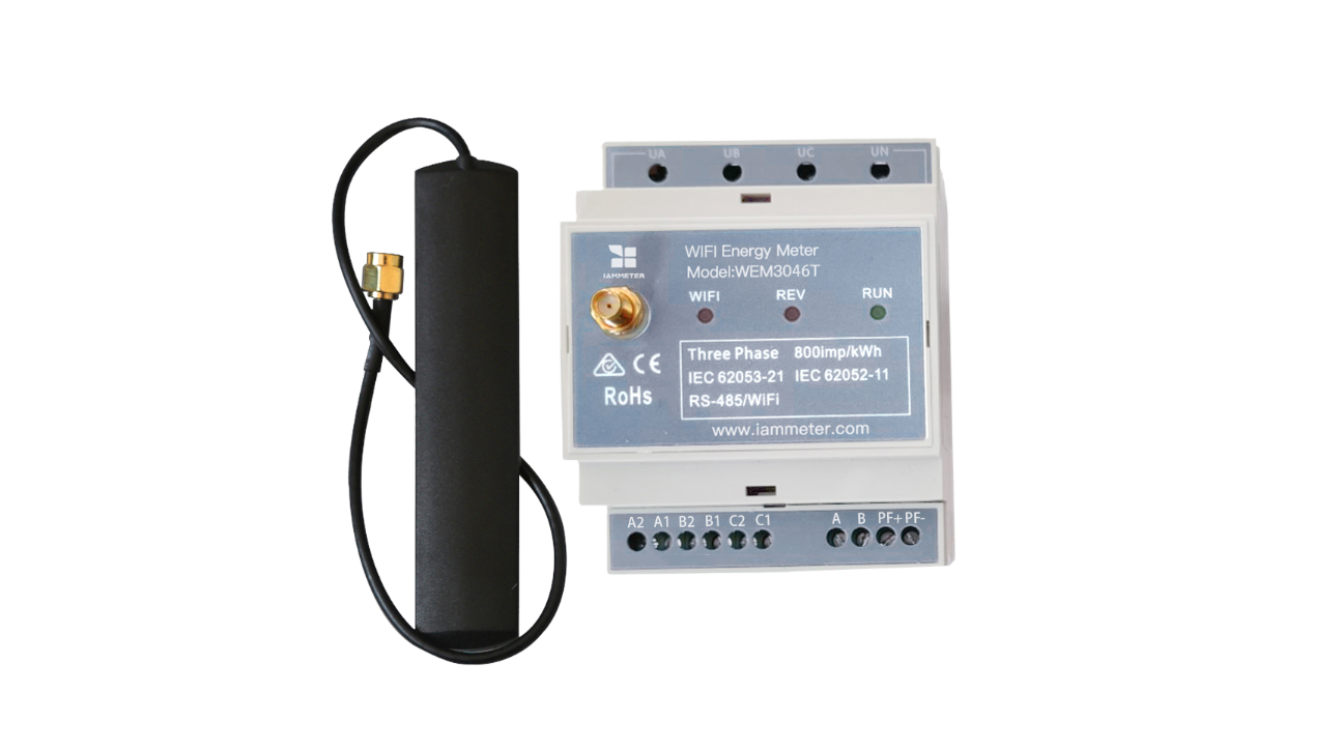
| Choose a high-current three-phase meter | WEM3046T/WEM3046TE three-phase Wi-Fi energy meters |
9. FAQ
Can IAMMETER monitor power factor over time?
Yes. IAMMETER meters can record power factor values continuously, so users can view PF changes over time instead of checking only an instant value.
Can IAMMETER measure kVAR and kVARh?
IAMMETER meters support reactive power and reactive energy measurements. These values can be used to analyze inductive or capacitive load behavior and monitor reactive energy trends.
Can IAMMETER reduce reactive power charges directly?
No. IAMMETER is a monitoring and data collection tool. It does not perform power factor correction by itself. It can help users identify low-PF periods and verify whether correction measures are effective.
Is IAMMETER a professional power quality analyzer?
No. IAMMETER is better described as a lightweight online monitoring tool for kW, kWh, kVAR, kVARh, and PF. For harmonic analysis, transient capture, and advanced power quality diagnosis, a professional PQ analyzer is still required.
Which IAMMETER page should I read next?
If you want to understand the concept, read Reactive power parameters explained. If you want to know how to measure it with IAMMETER, read How to measure reactive power with IAMMETER. If you need integration data, read 3-phase reactive power with Modbus/MQTT.
Conclusion
Reactive power and power factor are not only theoretical electrical terms. For many commercial, industrial, and solar users, they are connected to electricity bills, equipment behavior, system efficiency, and correction verification.
IAMMETER provides a practical way to monitor these indicators continuously. By recording PF, kVAR, and kVARh over time, users can move from simply understanding reactive power to making data-based decisions about monitoring, troubleshooting, and optimization.